
Portable AI Agent Skills: One Skill, Every Model

Most teams write an AI agent skill once per tool, then rewrite it for every new model. AI Agent Workflow Automation done right treats skills as portable configuration, not vendor lock-in — one canonical folder, a sync script, and every agent (Claude, Gemini, Codex) reads the same instructions.
Table of Contents
- The Problem: One Skill, Three Copies
- A Canonical Source of Truth
- Porting a Third-Party Plugin Without Losing Your Rules
- Fixing Cross-References Before They Break
- Sync, Don't Copy-Paste
- FAQ
The Problem: One Skill, Three Copies
We run three AI coding tools day to day: Claude Code, Codex, and Gemini CLI. Each has its own idea of what a "skill" is — a markdown file with instructions the model loads before acting. The trap is obvious in hindsight: write a skill for Claude, then hand-copy it into the Gemini config, then again for Codex. Three copies drift apart within a month. One gets a bug fix, the other two don't.
Model Context Protocol Entwicklung and MCP-based skill config solve half the problem — they standardize what an agent can call. They don't solve where the instructions live. That's a filesystem and process problem, not a protocol problem.
A Canonical Source of Truth
Our fix: a single directory, ~/.agents, holds every portable skill as a plain folder with a SKILL.md — YAML frontmatter (name, description) plus markdown body. No agent-specific syntax inside. A small PowerShell sync script then either symlinks that folder into Claude's and Codex's native skill directories, or — for Gemini, which reads ~/.agents/skills directly — does nothing at all.
The rule that keeps this from rotting: edit the canonical copy, never the linked one. A sync.ps1 dry-run reports every pending change and every conflict before anything touches disk; -Apply only runs after a human reads that report.
Running the sync script without -Apply costs nothing and catches naming collisions before they overwrite a skill you meant to keep separate.
Porting a Third-Party Plugin Without Losing Your Rules
The harder case: adopting someone else's plugin. We installed a community blog-automation plugin built for Claude Code — 32 sub-skills, five subagents, real Python tooling for schema validation, fact-checking, and SEO scoring. Wanted it everywhere, not just Claude.
Three categories emerged fast:
- Portable as-is —
SKILL.mdfiles using the same plain frontmatter format we already standardized on. Straight copy. - Portable with fixes — Python scripts and shared reference docs, callable by any agent via shell, but written with paths relative to the plugin's own folder layout.
- Not portable — Claude-specific subagent definitions (a delegation format Gemini and Codex don't share). Left Claude-only rather than forcing a bad translation.
We vendored the plugin's repo into a stable path outside Claude's version-pinned plugin cache — that cache gets silently replaced on update, which would break anything pointing into it.
Fixing Cross-References Before They Break
Category 2 above nearly bit us. Several sub-skills referenced a shared references folder and sibling scripts using paths like skills/blog/references/visual-media.md — valid only when the whole plugin repo sits at a known relative root. Flatten those files into a shared skills directory and every reference silently breaks the moment an agent tries to open a file that isn't where the instructions say it is.
The fix was mechanical, not clever: rewrite every relative reference to an absolute path pointing at the vendored repo before copying anything into the shared skills folder. Verify with a grep pass, not a hope, that no relative path survived the move.
Sync, Don't Copy-Paste
The last mile is discipline, not tooling — the same discipline behind LLM Tool Integration Laravel work, where a tool definition drifting from its backend contract breaks silently instead of loudly. Every new portable skill goes into the canonical directory first. The sync script's dry-run output — changes, conflicts, verified-unchanged — is the actual gate, the same way draft: true gates a blog post before it ships. Skip the dry-run once, and you're back to three copies drifting apart.
The payoff isn't abstract: fewer prompts explaining the same convention three times, one place to fix a bug instead of three. Same discipline we bring to client work — Custom MCP Server Development, n8n Automatisierung Agentur Deutschland pipelines, Individualsoftware entwickeln lassen — config living in one engineer's head isn't infrastructure, it's a liability. We covered the orchestration layer these skills run inside in our MCP engineering piece and the harness/SDK architecture in our agent swarms breakdown. Need this built into your Software Development pipeline instead of duct-taped between tools? That's Geschäftsprozesse Automatisieren Agentur work.
FAQ
Do Claude Code, Gemini CLI, and Codex read skills the same way? No. Claude and Codex expect skills inside their own native directories (symlinks work fine); Gemini CLI can read a shared folder directly if pointed at it in its global instructions file.
What happens to features that only work in one tool, like Claude subagents? Leave them where they work. Forcing a translation into a format the target tool doesn't support produces something that looks portable but silently fails.
Is vendoring a plugin repo instead of using the tool's plugin manager overkill? Not if the plugin manager's cache is version-pinned and gets replaced on update — which several are. A stable, separately-updated copy is what makes absolute-path references reliable.
Photo by Sigmund via Unsplash.
Follow Masri Systems on Google
Add us as a preferred source in Google Search.
Related Articles & Guides
AI Agent Workflow Automation: Curated 123-Tool Stack
Curated directory of 123 open-source AI agent frameworks, MCP servers, and developer tools for production AI agent workflow automation and autonomous systems.
Geschäftsprozesse automatisieren: 17 Scheduled Tasks der Agentur
Wie Masri Systems 17 autonome Agenten-Jobs, Sidecars und Cron-Tasks einsetzt, um Geschäftsprozesse im Entwickler-Alltag wartungsfrei zu automatisieren.
Command Center: Autonome KI Agenten Geschäftsprozesse KMU steuern
Autonome KI Agenten Geschäftsprozesse KMU: Steuern Sie Gemini, Codex und Claude parallel in einem sicheren VILT Stack Command Center mit OS-Locking.

Sectors of Computer Science & Software Engineering
Explore the primary disciplines of computer science, tech career paths, software engineering specialization tracks, and modern developer tooling.
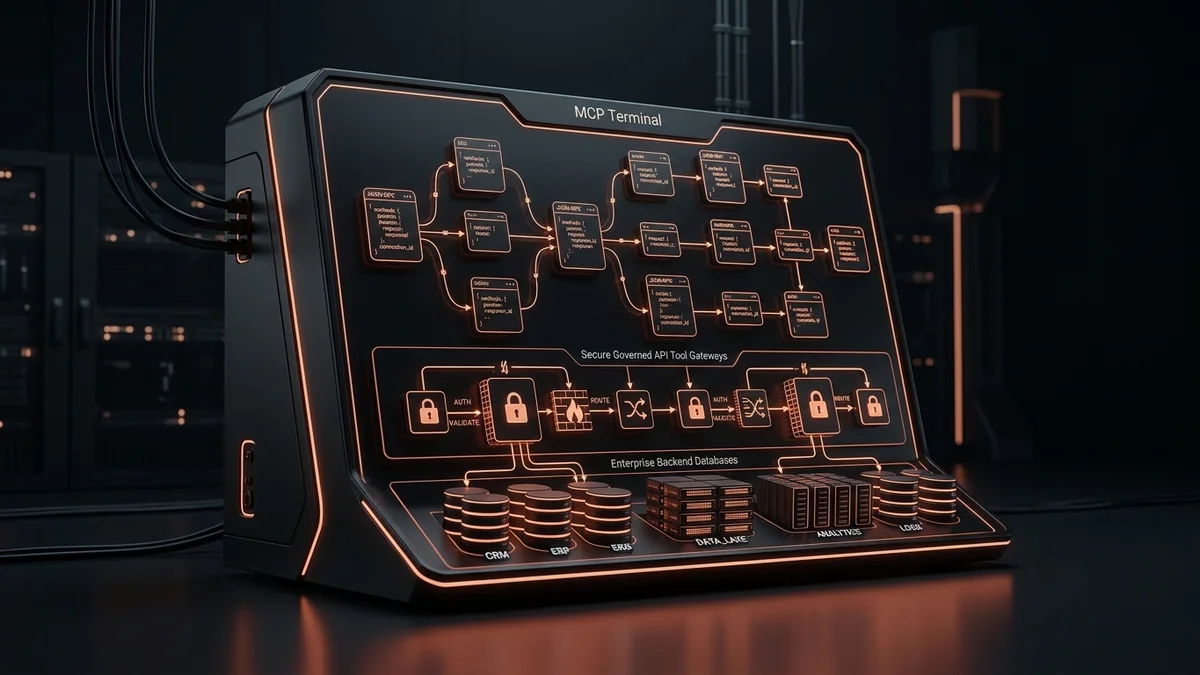
Custom MCP Server Development: Give AI Agents Real Business Access
Custom MCP Server Development connects Claude, ChatGPT, and Gemini to your actual business systems — securely, without duct-taped API hacks.

Openship: A Self-Hosted Deployment Platform With No CI/CD Pipeline
Openship is an Apache 2.0 self-hosted deployment platform that skips CI/CD YAML. What v0.6.7 does well, and why pre-1.0 status should shape your rollout.

Software Engineer Career Roadmap
Explore the complete software engineer career roadmap. Master junior to senior transitions, high-demand tech specializations, and modern AI development.

Website SEO & AI Search Engines
Master website SEO & AI search engines. Automate instant IndexNow submissions to Bing and AI crawlers using GitHub Actions, curl, and automated sitemap.