
Enforcing Quality & Security in Agentic Workflows

Generative AI accelerates initial code synthesis but risks flooding repositories with subtle architectural flaws and security vulnerabilities. Implementing rigorous AI code review best practices combines automated static analysis, strict type contracts, and human-in-the-loop validation to ensure machine-generated code meets enterprise production standards.
Table of Contents
- The AI Code Quality Paradox
- 4 Core Pillars of AI Code Review Best Practices
- Visualizing the Automated Review Gatekeeper
- Security, Dependency, and Hallucination Audits
- Frequently Asked Questions
- Conclusion & Next Steps
- Sources & Image Attributions
The AI Code Quality Paradox
As AI coding assistants and autonomous agent swarms become standard developer tools, code generation velocity has multiplied. However, increased output often leads to subtle regressions, hallucinations of non-existent packages, and architectural drift.
Treating AI code as trusted output introduces critical vulnerabilities. Establishing strict AI code review best practices requires shifting from passive inspection to proactive, automated verification gates.
Integrating these validation standards alongside foundational concepts like Clean Architecture and Apply the 80-20 Principle for Productivity guarantees that developer acceleration does not compromise system reliability.
4 Core Pillars of AI Code Review Best Practices
Enterprise engineering teams enforce four essential guardrails when reviewing AI-generated pull requests:
1. Zero-Trust Logic Verification
Never assume AI-generated logic handles edge cases correctly. LLMs frequently generate code that passes the "happy path" while failing on null pointer exceptions, race conditions, or unhandled database disconnects. Reviewers must explicitly verify boundaries and negative test cases.
2. Automated Static Analysis & Strict Linter Enforcements
Human reviewers should not waste cognitive energy catching formatting or syntactic inconsistencies. Automated CI pipelines must enforce strict TypeScript compilation, PHPStan/Larastan type checks, and security linters before a human reviewer ever opens the diff.
3. Architectural Boundary Integrity
AI models often optimize for localized simplicity, bypassing established project patterns (such as injecting database queries directly into presentation templates). Enforce strict separation of concerns, ensuring domain entities and use cases remain decoupled from framework adapters.
4. Continuous Regression & Contract Testing
Every AI-assisted pull request must be paired with deterministic unit and integration tests. Automated test suites verify that new features fulfill their API contracts without breaking downstream consumers.
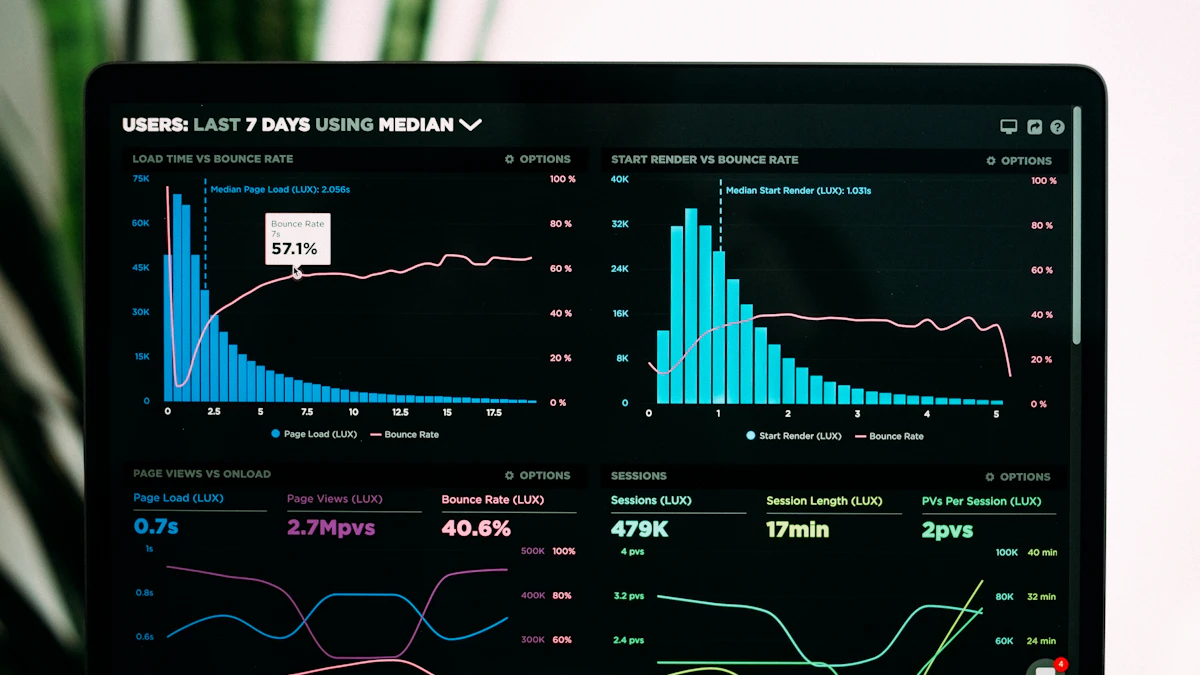
Visualizing the Automated Review Gatekeeper
A multi-tiered review architecture filters AI code before merging into production branches:
flowchart TD
    A["AI Coding Agent Generates PR"] --> B["Automated Linter & Type Checker (CI Gate)"]
    B -->|Fails Checks| C["Auto-Reject / Agent Self-Correction"]
    B -->|Passes Checks| D["Automated Test Suite & Security Scan (SAST)"]
    D -->|Fails Tests| C
    D -->|Passes Tests| E["Human Senior Engineer Architectural Review"]
E --> F["Approved & Merged to Production"]Always audit newly introduced third-party package imports. AI models can fabricate package names (slopsquatting vulnerabilities) or pull in deprecated, unmaintained libraries that introduce severe software supply chain risks.
Security, Dependency, and Hallucination Audits
Beyond functional correctness, AI-generated code introduces distinct security challenges. LLMs trained on legacy codebases may generate outdated hashing algorithms, insecure CORS configurations, or raw SQL queries vulnerable to injection.
Enforce the following security standards across all AI pull requests:
- OWASP LLM Verification: Cross-reference code changes against the OWASP Top 10 for LLM Applications.
- Dependency Lockfile Validation: Ensure lockfiles resolve strictly to verified, signed registries.
- Secret Scanning: Use automated tools to block any synthesized code containing placeholder API keys or leaked development credentials.
Frequently Asked Questions
What is the most common vulnerability in AI-generated code?
The most frequent issues are insecure default configurations, improper input sanitization, and the hallucination of non-existent libraries or deprecated API signatures.
Should human engineers still review every AI-generated pull request?
Yes. Automated CI pipelines filter syntax, types, and basic regressions, but human engineers must validate architectural alignment, business logic nuances, and long-term maintainability.
How do I configure CI/CD to automatically test AI code?
Set up automated GitHub Actions that run static analysis (e.g., ESLint, PHPStan), security audits (e.g., Snyk, Trivy), and complete end-to-end integration test suites on every pull request.
Conclusion & Next Steps
Adopting AI tooling does not mean lowering engineering standards. By establishing structured AI code review best practices, software organizations capture the speed of AI while maintaining fortress-like system stability and code elegance.
At Masri Systems, we specialize in architecting secure digital platforms and automated developer workflows. Discover our high-performance Software Development and Clean Architecture solutions to elevate your technical infrastructure.
Sources & Image Attributions
- Header Image: Developer working on code review by Caspar Camille Rubin on Unsplash
- Body Image: Data analytics and software metrics dashboard by Luke Chesser on Unsplash
Follow Masri Systems on Google
Add us as a preferred source in Google Search.
Related Articles & Guides
AI Agent Workflow Automation: Curated 123-Tool Stack
Curated directory of 123 open-source AI agent frameworks, MCP servers, and developer tools for production AI agent workflow automation and autonomous systems.

Free Developer Certifications: 5 High-Impact Courses & Badges
5 verifiable free developer certifications and coding courses from Postman, Google Cloud, DeepLearning.AI, and freeCodeCamp to elevate your engineering resume.

Geschäftsprozesse automatisieren: 17 Scheduled Tasks der Agentur
Wie Masri Systems 17 autonome Agenten-Jobs, Sidecars und Cron-Tasks einsetzt, um Geschäftsprozesse im Entwickler-Alltag wartungsfrei zu automatisieren.
Command Center: Autonome KI Agenten Geschäftsprozesse KMU steuern
Autonome KI Agenten Geschäftsprozesse KMU: Steuern Sie Gemini, Codex und Claude parallel in einem sicheren VILT Stack Command Center mit OS-Locking.

Sectors of Computer Science & Software Engineering
Explore the primary disciplines of computer science, tech career paths, software engineering specialization tracks, and modern developer tooling.
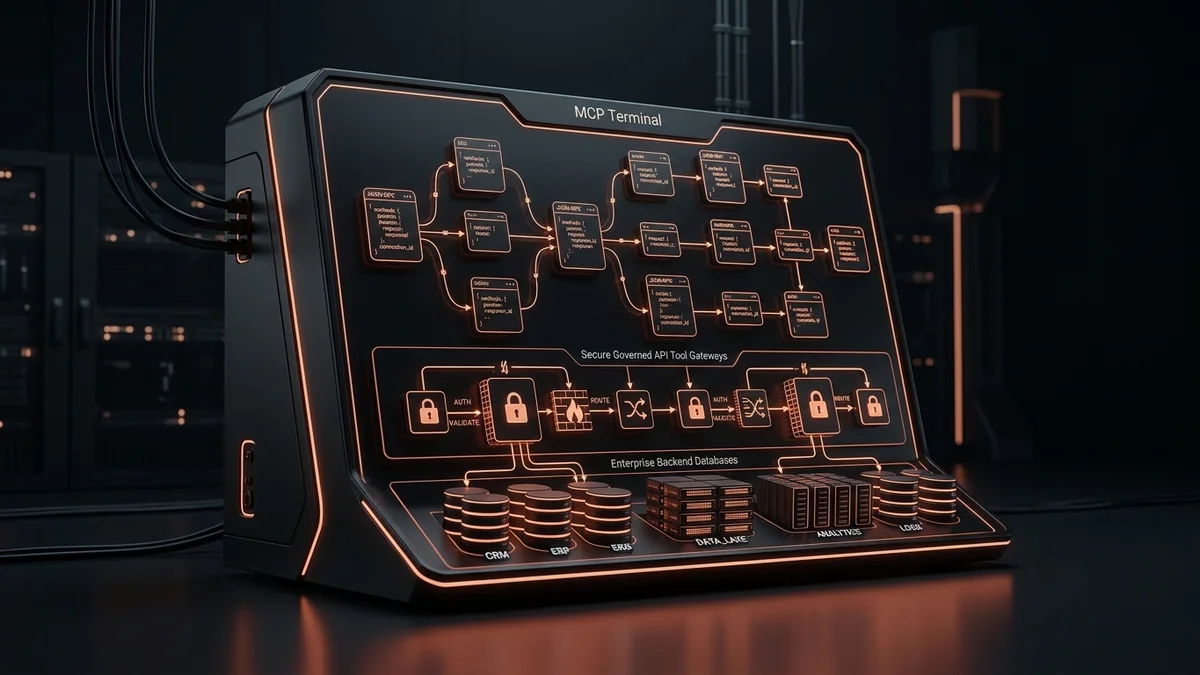
Custom MCP Server Development: Give AI Agents Real Business Access
Custom MCP Server Development connects Claude, ChatGPT, and Gemini to your actual business systems — securely, without duct-taped API hacks.

Portable AI Agent Skills: One Skill, Every Model
Stop rewriting the same AI agent workflow for Claude, Gemini, and Codex. Build portable skills once with AI Agent Workflow Automation and sync everywhere.

Openship: A Self-Hosted Deployment Platform With No CI/CD Pipeline
Openship is an Apache 2.0 self-hosted deployment platform that skips CI/CD YAML. What v0.6.7 does well, and why pre-1.0 status should shape your rollout.