
Individualsoftware vs Enterprise Bloat

Many engineering teams paralyze product momentum by architecting for hypothetical Netflix-level traffic on day one. Navigating Individualsoftware vs Enterprise Bloat requires resisting premature microservice complexity and instead establishing clean modular monolith foundations using Laravel, Vue, and asynchronous queues to deliver high velocity and seamless scalability.
Table of Contents
- The Cost of Premature Scalability & Enterprise Bloat
- 4 Core Habits of Scalable Foundations Architecture
- Visualizing the Architecture Dilemma
- When to Refactor: Empirical Metrics vs. Theoretical Scenarios
- Frequently Asked Questions
- Conclusion & Next Steps
- Sources & Image Attributions
The Cost of Premature Scalability & Enterprise Bloat
A staggering number of software startups and corporate initiatives fail before launch due to self-inflicted architectural complexity. Teams spend months configuring distributed event buses, multi-cluster Kubernetes environments, and decoupled microservices for applications that currently have zero active users.
Understanding the dynamic of Individualsoftware vs Enterprise Bloat protects development velocity. Building custom individual software should never mean introducing fragile spaghetti code—nor should it mean over-engineering for millions of concurrent users before validating product-market fit.
Pairing pragmatic modular architectures with proven standards like Clean Architecture and personal productivity habits from Apply the 80-20 Principle for Productivity ensures software teams ship features quickly while maintaining a clear upgrade path.
4 Core Habits of Scalable Foundations Architecture
High-performing software teams lay durable foundations using four pragmatic principles:
1. The Modular Monolith First
Start with a well-organized modular monolith. Monoliths are 5x faster to scaffold, significantly easier to test, and eliminate distributed network latency. Modules can always be extracted into dedicated microservices later when traffic justifies the operational overhead.
2. Single-Action Controllers & Domain Actions
Keep HTTP controllers ultra-lean. In frameworks like Articles/Coding/Laravel, encapsulate business logic inside single-action domain classes to keep business rules reusable across web, CLI, and API requests.
3. Stateless Application Servers & Queue Decoupling
Store user sessions in Redis and offload media assets directly to S3/cloud storage. Any background task taking over 300ms (PDF rendering, email cascades) should be dispatched to asynchronous queue workers.
4. Component-Driven Frontend Modularity
Structure frontend interfaces in Vue.js or React around single-responsibility components with strict typed props, ensuring UI elements can be hot-swapped without breaking parent views.

Visualizing the Architecture Dilemma
Choosing the pragmatic middle path avoids both technical debt and infrastructure bloat:
flowchart TD
    A["New Software Project Conception"] --> B{"Choose Architecture Strategy"}
    B -->|Premature Over-Engineering| C["Complex Microservices & Event Meshes Day 1"]
    B -->|Pragmatic Foundations| D["Modular Monolith (Laravel / Vue / Queues)"]
    B -->|Unstructured Shortcuts| E["Spaghetti Code & Hardcoded Logic"]
    C --> F["Velocity Collapse & Operational Bloat"]
    E --> G["Fragile House of Cards & Total Rewrite"]
D --> H["Rapid Feature Delivery & Effortless Horizontal Scaling"]"You Ain't Gonna Need It." Never build complex infrastructure for a performance problem you haven't empirically measured. Architect your code so that resolving future bottlenecks requires modular extension rather than a complete rewrite.
When to Refactor: Empirical Metrics vs. Theoretical Scenarios
Refactoring should be driven strictly by measurable production telemetry:
- Database Query Latency: When
pg_stat_statementsshows specific queries degrading under concurrent load, introduce targeted composite indexes or Redis caching. - Queue Worker Saturation: Scale background worker processes horizontally before refactoring synchronous architecture.
- Domain Boundaries: Extract a subsystem into an independent microservice only when multiple independent teams need to deploy it on separate release cycles.
Frequently Asked Questions
Why is a modular monolith better than microservices for new projects?
A modular monolith provides clean code boundaries without the distributed complexity of inter-service network calls, distributed tracing, and eventual consistency bugs, allowing teams to iterate rapidly.
How does custom Individualsoftware prevent vendor lock-in?
Custom software built on open-source foundations (like Laravel, PostgreSQL, and Vue) gives enterprises 100% ownership of their codebase, database schemas, and infrastructure, eliminating costly recurring SaaS bloat.
When should caching (e.g. Redis) be introduced?
Introduce Redis caching for session state and rate-limiting from day one, and apply query-level caching once underlying database queries have been properly indexed and optimized.
Conclusion & Next Steps
Balancing Individualsoftware vs Enterprise Bloat is the hallmark of senior software engineering. By building clean, scalable foundations and focusing on delivering real user value, development teams achieve sustained velocity and enterprise stability.
At Masri Systems, we specialize in designing custom Individualsoftware, high-performance web applications, and enterprise digital systems tailored to your exact business goals. Explore our specialized Software Development and Website Architecture services to build scalable software without enterprise bloat.
Sources & Image Attributions
- Header Image: Team collaborating on software architecture by Annie Spratt on Unsplash
- Body Image: Developer working on code review by Caspar Camille Rubin on Unsplash
Follow Masri Systems on Google
Add us as a preferred source in Google Search.
Related Articles & Guides

Free Developer Certifications: 5 High-Impact Courses & Badges
5 verifiable free developer certifications and coding courses from Postman, Google Cloud, DeepLearning.AI, and freeCodeCamp to elevate your engineering resume.

Sectors of Computer Science & Software Engineering
Explore the primary disciplines of computer science, tech career paths, software engineering specialization tracks, and modern developer tooling.
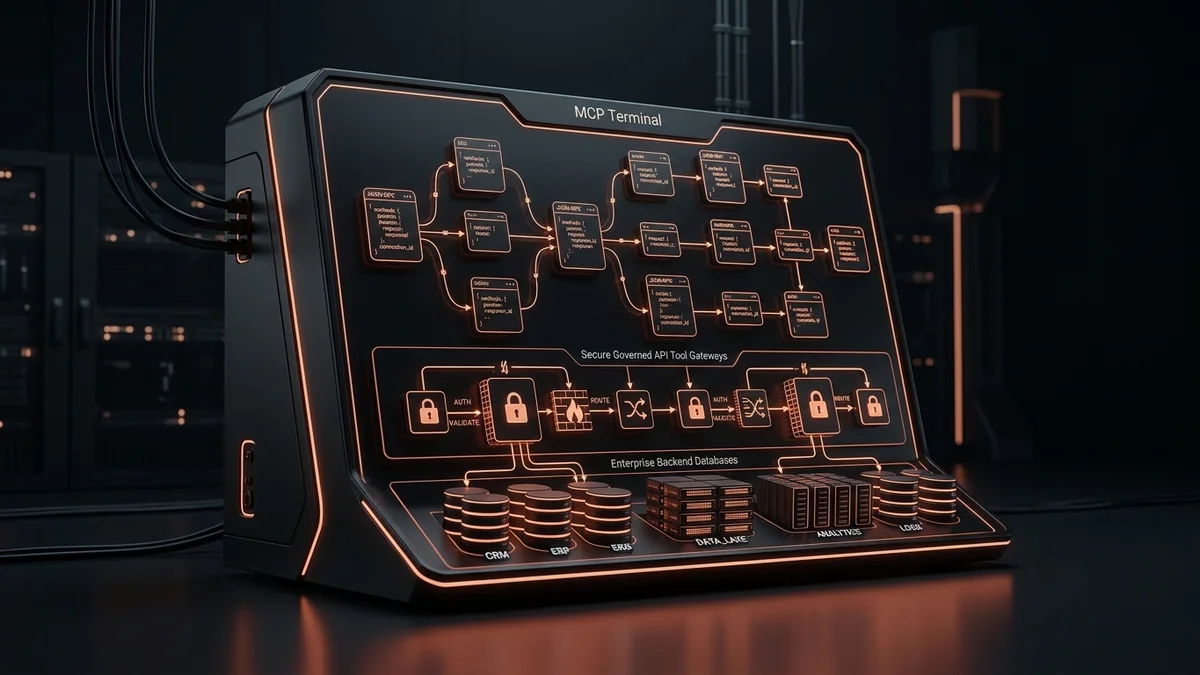
Custom MCP Server Development: Give AI Agents Real Business Access
Custom MCP Server Development connects Claude, ChatGPT, and Gemini to your actual business systems — securely, without duct-taped API hacks.

Software Engineer Career Roadmap
Explore the complete software engineer career roadmap. Master junior to senior transitions, high-demand tech specializations, and modern AI development.

Why PHP 8.4 & Laravel Are the Smartest Choice for Web Apps
Explore modern PHP web development. Discover why PHP 8.4 performance, strict typing, JIT compilation, and Laravel make PHP the top choice for software teams.

Webdesign Portfolio Inspiration
Discover top webdesign portfolio inspiration. Explore curated developer showcases, creative agency landing pages, and best practices for conversion and UI.

Web Development Utilities: 10 Essential Free Browser Tools
Master essential web development utilities. Discover 10 free online tools for JSON formatting, JWT decoding, HAR network analysis, Base64, and CSV/YAML.
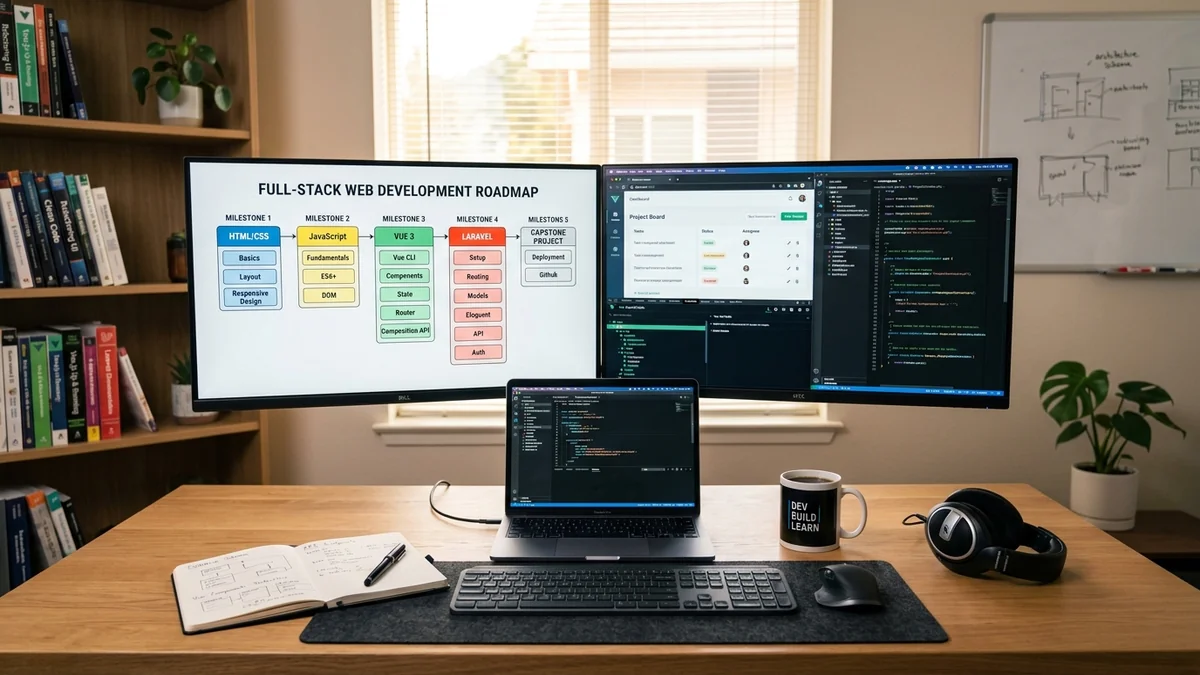
Web Development Curriculum: Full
Master full-stack web development. Comprehensive curriculum covering HTML/CSS/Tailwind, ES6+ JavaScript, Vue 3 & Vite, Laravel APIs, and CI/CD deployment.